
Keep your Mac turned on whenever power is available: Select “Start up automatically after a power failure.” Allow your Mac to wake briefly so users can access shared services (if applicable): Select any of the available “Wake for” options, for example, “Wake for network access.” See Share your Mac resources when it’s in sleep. In order to enable the Wake-on-LAN feature on the remote computer: On some computers, you may need to enable this feature on the BIOS setup. In the network card properties, you should go to the 'Power Management' and/or 'Advanced' tabs of the network adapter, and turn on the Wake-on-LAN feature. Download links are on the bottom of this page.
Wake On Lan is a Network Protocol that sends packet to an IP address of your choice that is specially formulated with a broadcast frame that will wake up the machine on the other end – that is, if WOL is enabled on the machine.
The ability to perform a LAN wake on a system can be incredibly useful in a range of situations.
To put simply if there is any time you might want a system to be turned on when you aren't sitting in front of it, then Wake-On-LAN, aka WOL, is precisely what you need!
Whether used for testing, or perhaps on a back-up system, it's quite useful to be able to remotely control and change the power state of a computer.
Even just accidentally shutting it down, or someone turning it off and leaving, can make WOL very useful!
With the software installed the networks NIC continues to receive power even while turned off and listens for a specific packet to be sent that will trigger a startup.
It's as simple as that!
And due to the simplicity there are a range of tools with a range of features to provide this very functionality.
Some are as basic as just providing wake, while others offer a greater degree of flexibility and specificity in how they do what they do!
It's worth noting that WOL does often have to be enabled in the BIOS on the system to be roused remotely, of course.
Best Wake-on-LAN Software & Tools for Windows 7, 10, Server 2012/2018:
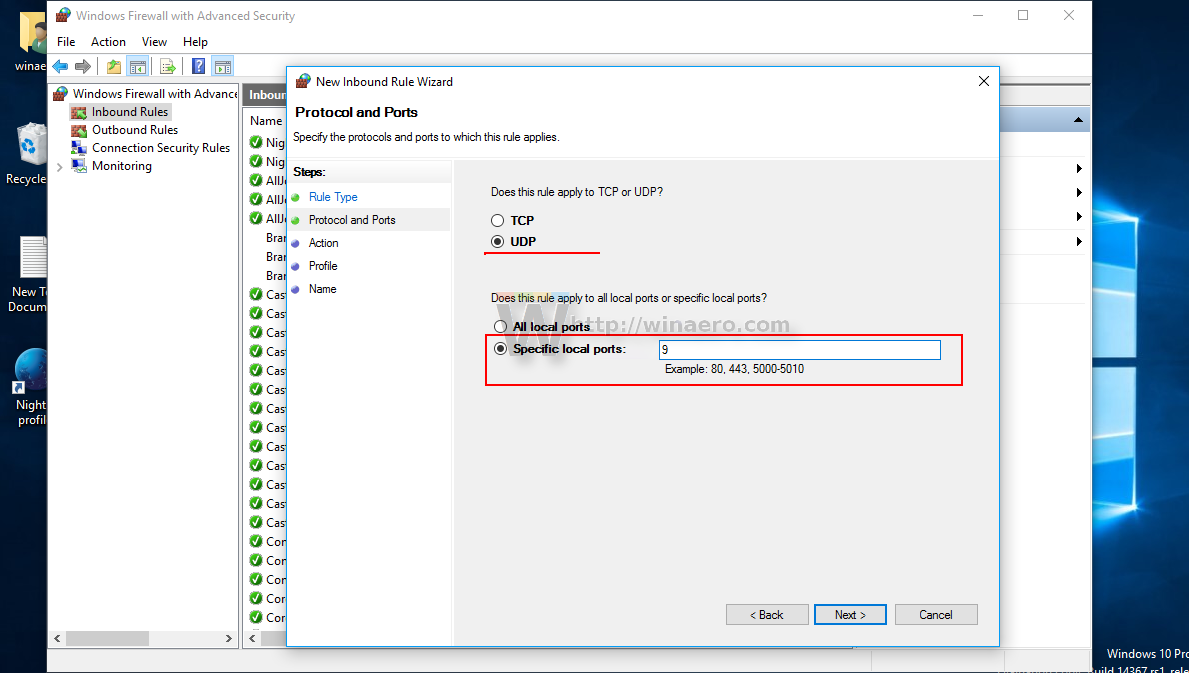
We've compiled a small list of the Best Wake on Lan software and tools that will help you Wake up any PC on your internal network via the protocol.
The Great part about most of the software below is that they're absolutely FREE! Grab one below and install it today to make sure you have it ready when you least expect.
1. SolarWinds FREE WOL Utility – FREE DOWNLOAD
This program is pretty lightweight and easy to setup, which makes it ideal for swiftly installing and configuring on a system.
There's really not a lot else to be said! It's one of those programs that is small and compact because it has a singular focus and it does what it needs to do as easily and with as little footprint as possible.
Price:
100% Free and Easy to Use!
Compatibility:

Any version of Windows from 2000 and up, including 64-bit
2. ManageEngine OpUtils
OpUtils gives you the option to manage and Monitor Wake-on-LAN Devices from a Easy-to-use dashboard!
They provide information about Devices, scheduling and even go as far as allowing you to group computers or systems to start all at once!
Some options that you have with this tool are as follows:
- Create Groups & Schedule WOL
- Schedule ALL or Individual PC's for WOL
- Boot Systems Across VLANs & Other networks!
- Automatically Scan & Discovery Devices with WOL Capabilities!
- and much More!
Click on the Link below to get started and download this great tool today!
Download:
3. Nirsoft
NirSoft, a common name when dealing with passwords and utilities revolving around them, also has a nice lightweight tool for handling WOL.
It has a nice simple interface that allows for managing a series of systems all at once and can even broadcast a WOL packet to a handful of systems at the same time to save you a little extra work.
It also offers command-line functionality that is ideal for scripting or bat files.
Download:
Price:
Free
Compatibility:
Any version of Windows from 2000 and up, including 64-bit
4. WakeOnLANx
Another simple and free tool that is purely focused on getting the job done without an excess of bells and whistles.
This one has a particularly customizable GUI, much more than many of the similar programs, and even offers a little bit of system information that can be requested from the target machine, such as drive space, MAC address, last boot time, a built-in remote access request, and several other handy features.
As far as free WOL tools, it's a pretty robust one for sure!
Download:
Price:
Free
Compatibility:
Most versions of Windows, also needs .NET Framework 4.0 or higher
5. Magic Packet
It doesn't get any more simple than this!
This is essentially a straight-up front-end UI for fully command-prompt based native WOL functionality.
It provides the most basic level of WOL needs with a nice and concise little graphical interface.
Download:
Price:
Free
Compatibility:
Most versions of Windows from 2k and up
6. EMCO
This program is a bit fancier looking than most of the more simple WOL tools, but it also offers a bit more functionality as a result.
The free version doesn't really do much more than most of the others listed here, but it does have a snappy interface for easy navigation and adjustment of some of the basic parameters.
The paid version boasts a bit more flexibility and has some useful logging and management features for the systems added to it.
Download:
Price:
Freeware and paid versions available, paid has $179 site license and $265 enterprise versions
Compatibility:
Windows XP and up
7. Aquila Tech
This program has a few handy features of note – it can also perform shutdowns on non-Windows systems via scripting, but it takes a bit of fiddling to get that working.
Aside from that it offers some functionality for troubleshooting WOL by monitoring the wake packets being sent and received, and has a built-in scanner for browsing host machines for WOL functionality.
Download:
Price:
Free
Compatibility:
Windows XP and up, .NET Framework 4.6 or higher
8. ManageEngine
This particular tool is part of a larger suite of basic management tools that comes part of a free program offered by ManageEngine.
It can invoke remote command prompts, take inventory of software, pull up task manager remotely, and several other features as well as, of course, WOL.
This is a handy option when you have a need for more than just the most basic functionality, but anyone who is interested primarily in WOL features will find the rest of it just gets in the way.
Download:
Price:
Free
Compatibility:
Windows 2003, Windows Vista, Windows 7
9. FusionFenix
Another option that is pretty barebones that comes with a few strong limitations, but it has one particular offering that makes it worth mentioning!
This particular free tool has a mobile app version for triggering WOL for a configured system, which can be quite handy for quickly firing up a computer from your phone – especially if you then have remote capabilities via the same phone!
Download:
Price:
Free
Compatibility:
Most Windows from 2000 and up, also has Android app version available for triggering WOL
Flexibility and functionality even while away from a computer is one of the most powerful tools we have in this day and age.
Being away from a system or office doesn't mean you can't repair, turn off, restart, and in this case, even turn back on a computer all from just about anyplace, and any device, with a network connection.
For a nice and easy, but still robust, option for WOL functionality the SOLARWINDS Free WOL Utility can be easily recommended for doing a great job! Its FREE, Easy to Use and gets the job done all the time!
Finding the Best Wake on Lan Software shouldn't be difficult and we hope the list above has served you well in finding one.
FREE WOL Software courtesy of Solarwinds!
Introduction
Wake on LAN (or WOL) allows you to remotely turn on a computer.
Note: WOL is available only on OS X 10.11 (El Capitan) or later.
Enabling WOL on OS X
To enable WOL, do the following:
Wake On Lan For Mac Os
Wake On Lan From Mac
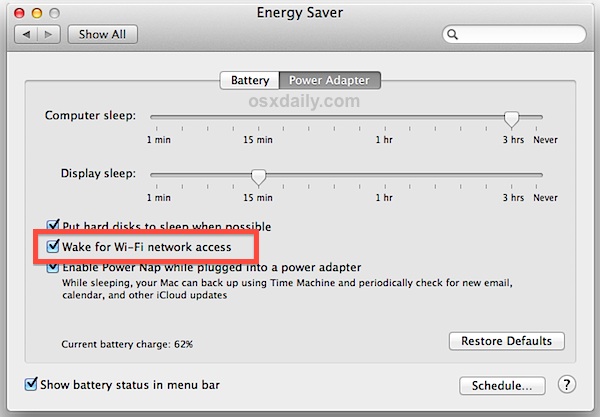
- For OSX it can be enabled from System Preferences ->Energy Saver by turning on Wake for network access.
- Restart the computer and boot into Recovery mode by holding CMD+R on boot until the Apple logo appears.
- Open Terminal from the Utilities menu.
- Disable System Integrity Protection by running the csrutil disable; reboot command.
- After OSX boots up, make sure you're logging in as an administrator and open Terminal from /Applications/Utilities/Terminal.app
- Log in as root by running the sudo -i command in the terminal window.
- Edit the boot configuration file by running the vim /Library/Preferences/SystemConfiguration/com.apple.Boot.plist command.
- Press i to enter Insert mode. Find the Kernel Flags and change it to Kernel Flags darkwake=0
- Press Esc, then input :wq and press Enter to save the file and quit vim.
- Run the reboot command.
- Boot into Recovery mode by holding CMD+R on boot time.
- Open Terminal from Utilities menu.
- Re-enable System Integrity Protection by running the csrutil enable; reboot command.
- After OSX boots up, disable the Password Requirement after sleep, by opening System Preferences >Security & Privacy, selecting the General tab, and unchecking the Require password field.